
Support to the formulation of a Low-Carbon and Climate-Resilient Long-Term Development Strategy (LTS) for the Dominican Republic
Project description
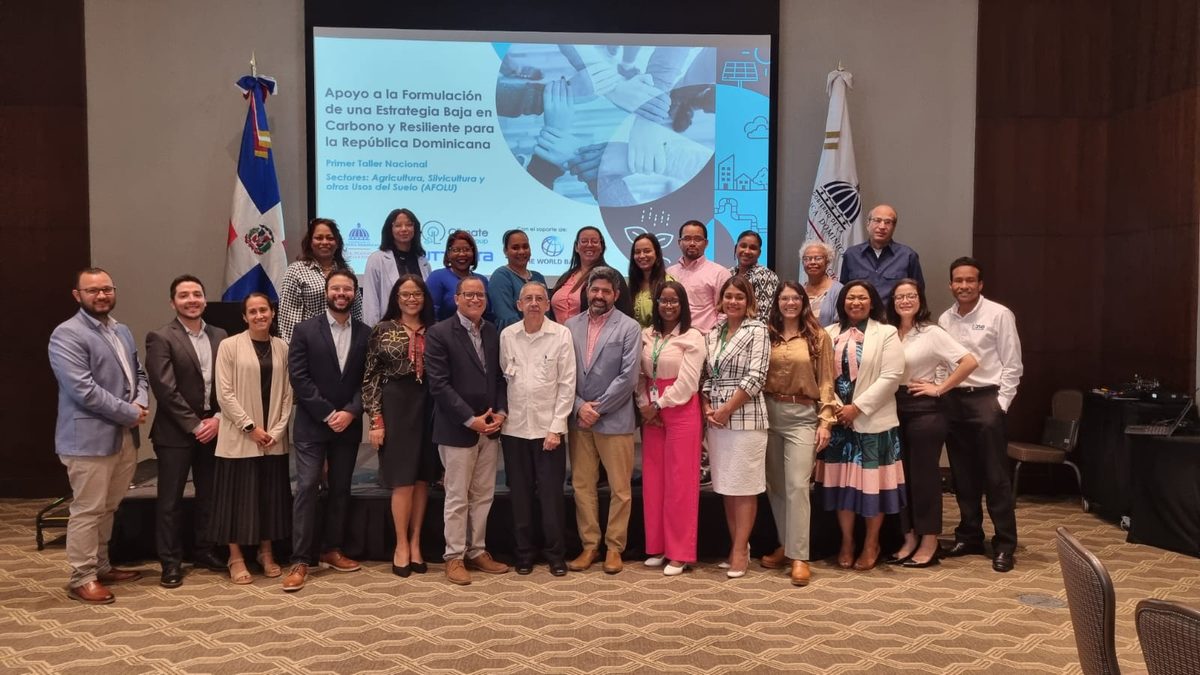
Climate Lead Group (CLG) supported the Government of the Dominican Republic in the development of its Low-Carbon and Climate-Resilient Long-Term Development Strategy (LTS) by combining analytical work, stakeholder engagement, and institutional strengthening to assess alternative development pathways toward mid-century. Rather than promoting a single prescriptive outcome, the project aimed to support strategic decision-making by exploring low-emission and climate-resilient pathways, their implications, and the trade-offs under uncertainty. The work was structured around four interconnected components. First, a shared national vision was developed through inclusive stakeholder consultations, bilateral meetings, and national workshops. As part of this process, stakeholders co-created a structured analytical framework based on the XLRM approach (eXogenous uncertainties, policy Levers, Relationships, and performance Metrics) to identify key emissions drivers, resilience priorities, policy options, data and modeling needs, and critical uncertainties. Second, integrated sectoral modeling and analysis were carried out using the OSeMOSYS-RD platform and a Robust Decision-Making (RDM) framework to evaluate alternative low-carbon and climate-resilient pathways for key sectors, including Energy, Agriculture, Forestry and Other Land Use, Waste, and Industrial Processes and Product Use, including emissions, costs, benefits, and robustness to uncertainty, with selected pathways informing a macroeconomic assessment led by the World Bank. Third, the project implemented a structured capacity-building program to through hybrid training sessions to strengthen national technical capacities in LTS concepts, sectoral modeling, results interpretation, and the use and future updating of the models, ensuring full transfer of analytical tools and materials to government institutions. Finally, the project supported the formulation of analytical inputs to the LTS, including sectoral narratives, policy milestones, and implementation considerations, to inform development planning, investment discussions, and future updates of national climate policies and NDCs.